Learning a Second Language
Several years ago, I set a goal for myself: learn a second language. It didn't really matter which one, but it had to be a language of a culture I was interested in visiting or fascinated with. That ended up being German. I believe being multilingual is a core part of being a well-rounded individual—a second language unlocks another culture's perspective and way of thinking, and learning a new one is one of the best exercises for the mind.
In the United States, learning a language is hard because there's no need to know any language other than English. Everybody speaks English, and everything we read, watch, and consume is in English. So as an American, it takes a concerted effort to make the time and effort to learn a new language. Not knowing where to start, I went where my friend Richard pointed me—Duolingo. Duolingo felt like a toy to me at first. I didn't believe you could learn a language in five-minute lessons on your phone. But Richard teaches French and Spanish, and his credibility alone was enough for me to give it a try. I downloaded Duolingo, started a free trial of Duolingo Super, and set out to make consistent progress in the German course every day.
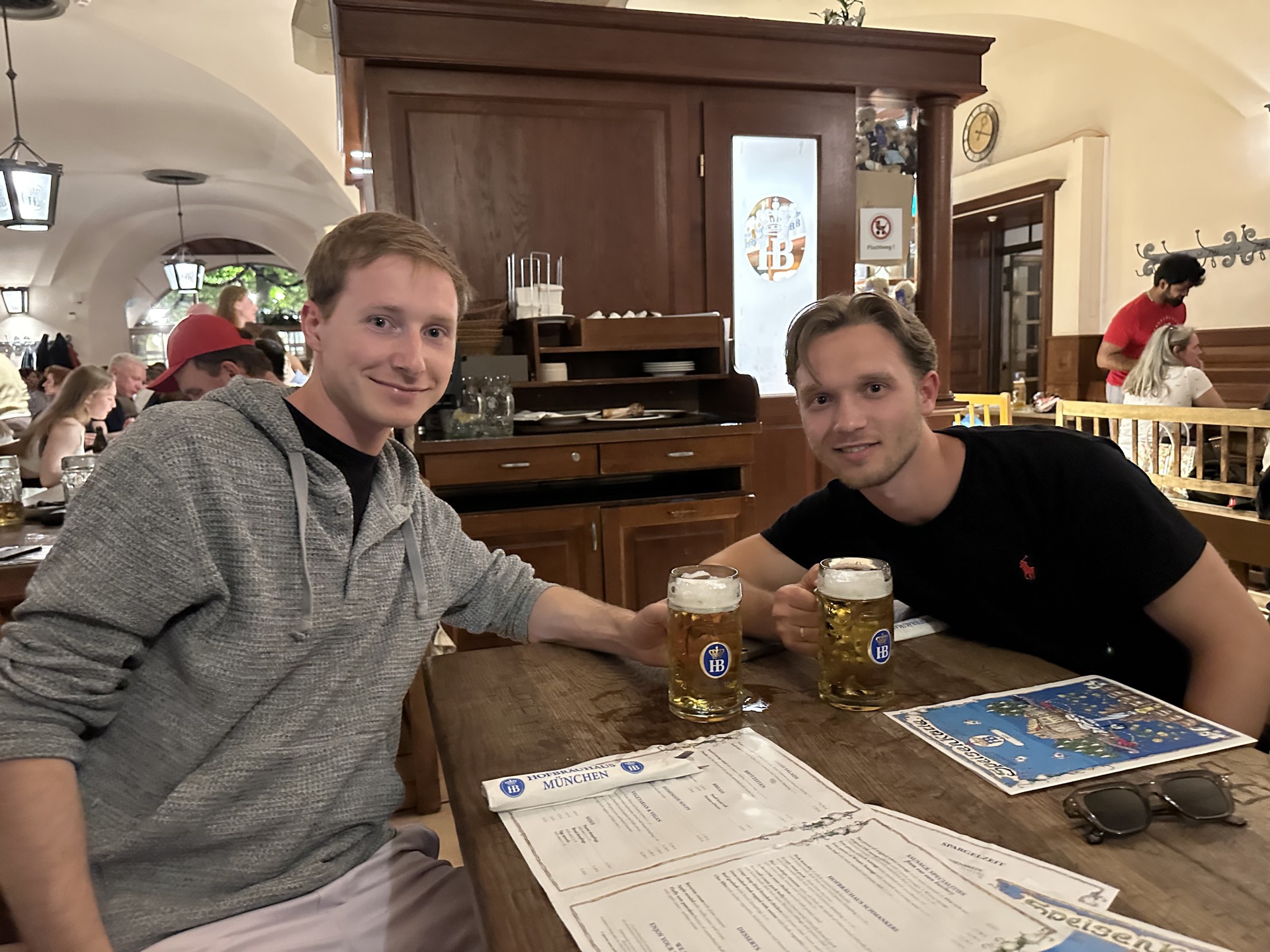
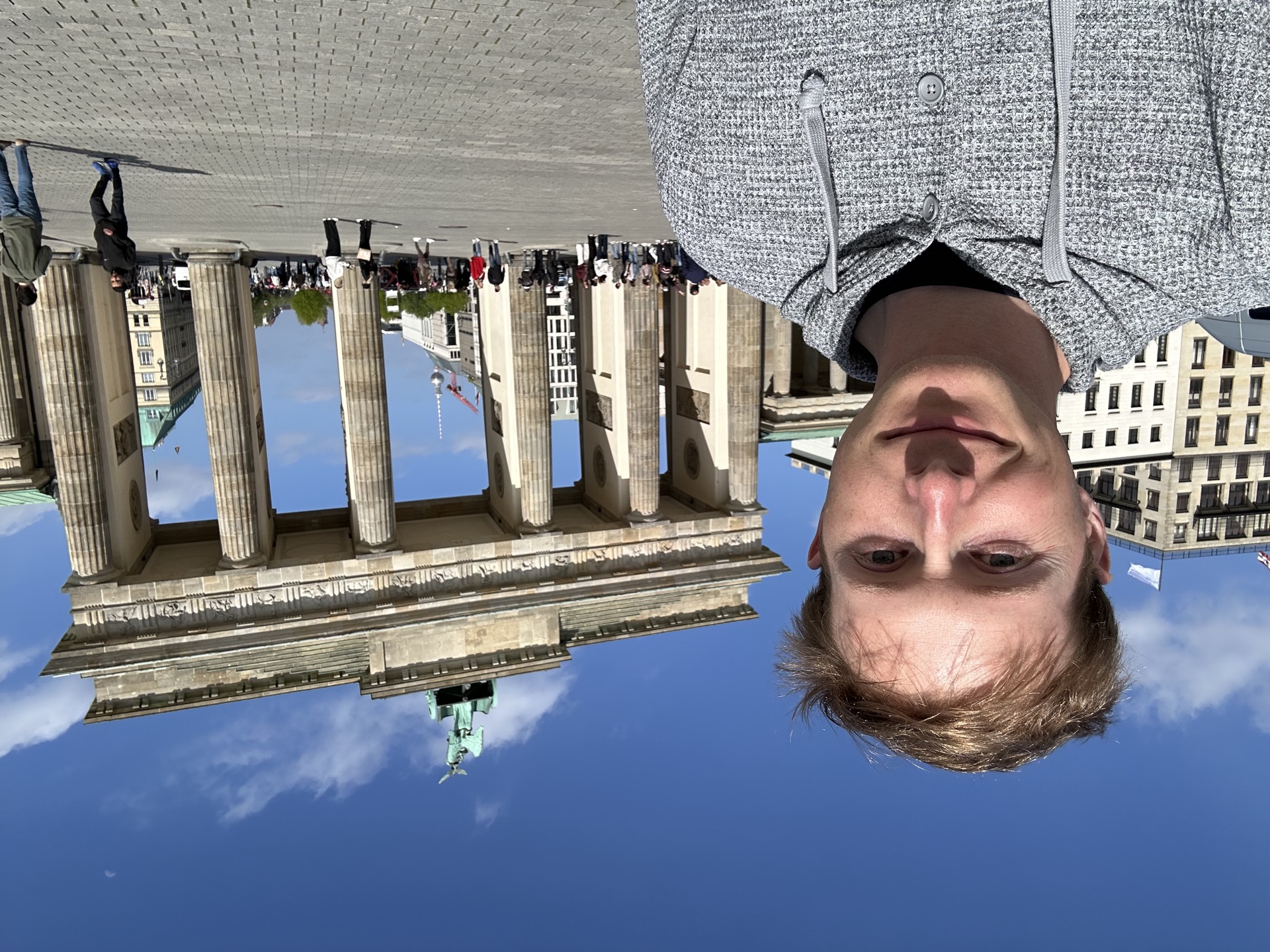
I didn't start the German course casually. I set real goals: X lessons every day, X sections every month. The course promised to bring learners to B1—enough to speak independently in common scenarios like travel, hobbies, and everyday life. And when I finished, my reward would be a three-week trip to Germany, where I'd put everything to the test.
I was consistent with my plan, spending about 45 minutes to an hour on Duolingo lessons every single day. I did them wherever and whenever I could: in bed before going to sleep, in my car before going into the office, and in any pocket of spare time I had. Ideally, I would knock out the day's lessons all in one go to keep my concentration consistent. Whenever I didn't understand the grammar in an exercise, I took a screenshot of the sentence and looked it up later with ChatGPT. I also subscribed to Duolingo Max for its AI speaking practice—being able to have a real back-and-forth conversation, even with AI, turned out to be crucial for getting comfortable before the trip. And I had a friend in Germany—Jonas—who I'd call every other week for an hour-long session. We'd go back and forth between German and English, and every call, the improvement was noticeable.
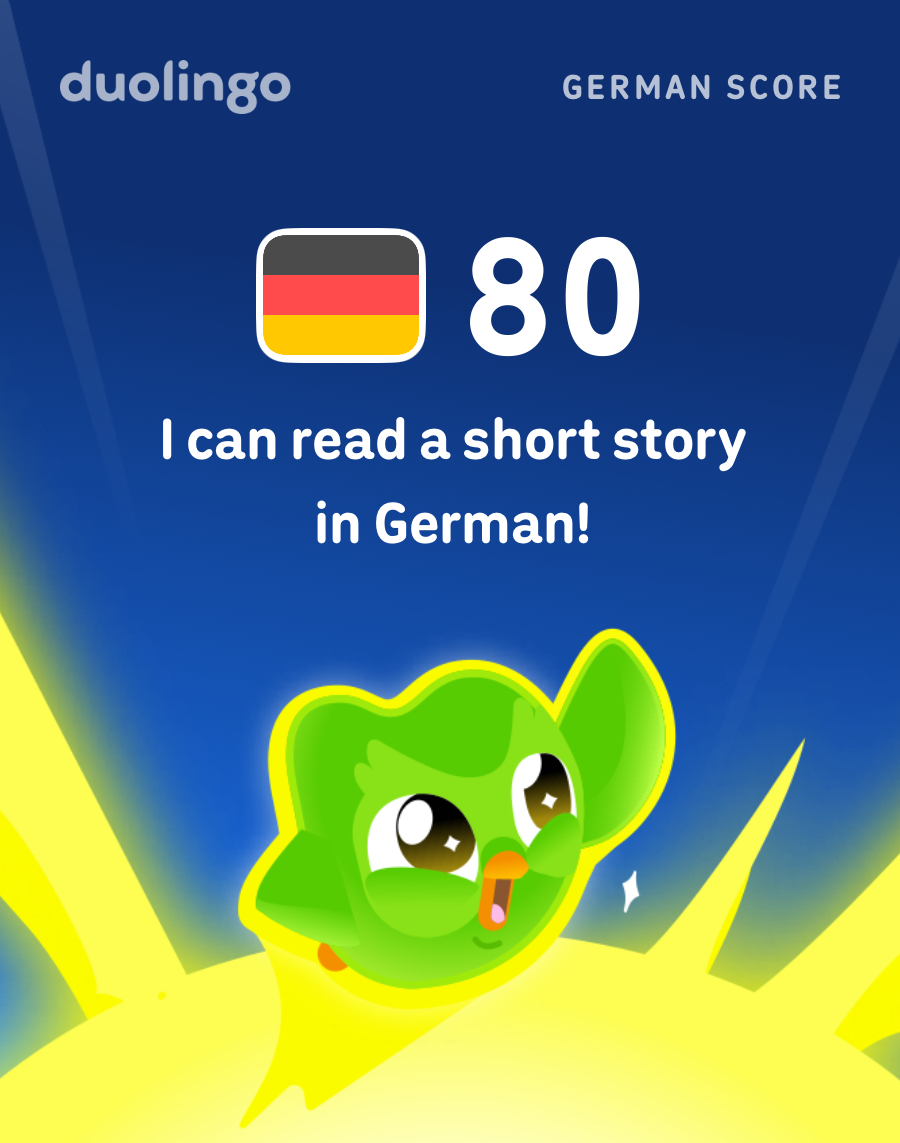
On day 588, I finished the German course on Duolingo and maxed out my score to 80—a solid B1 level. It took a year, seven months, and 11 days, and despite my initial skepticism of Duolingo, I must admit it worked—really well. I finished with two weeks to spare before my flight. After 588 days, I was ready to find out what I actually knew.